The best SEO tools for bloggers range from $0 to $549 a month, and the free end does more than most people think.
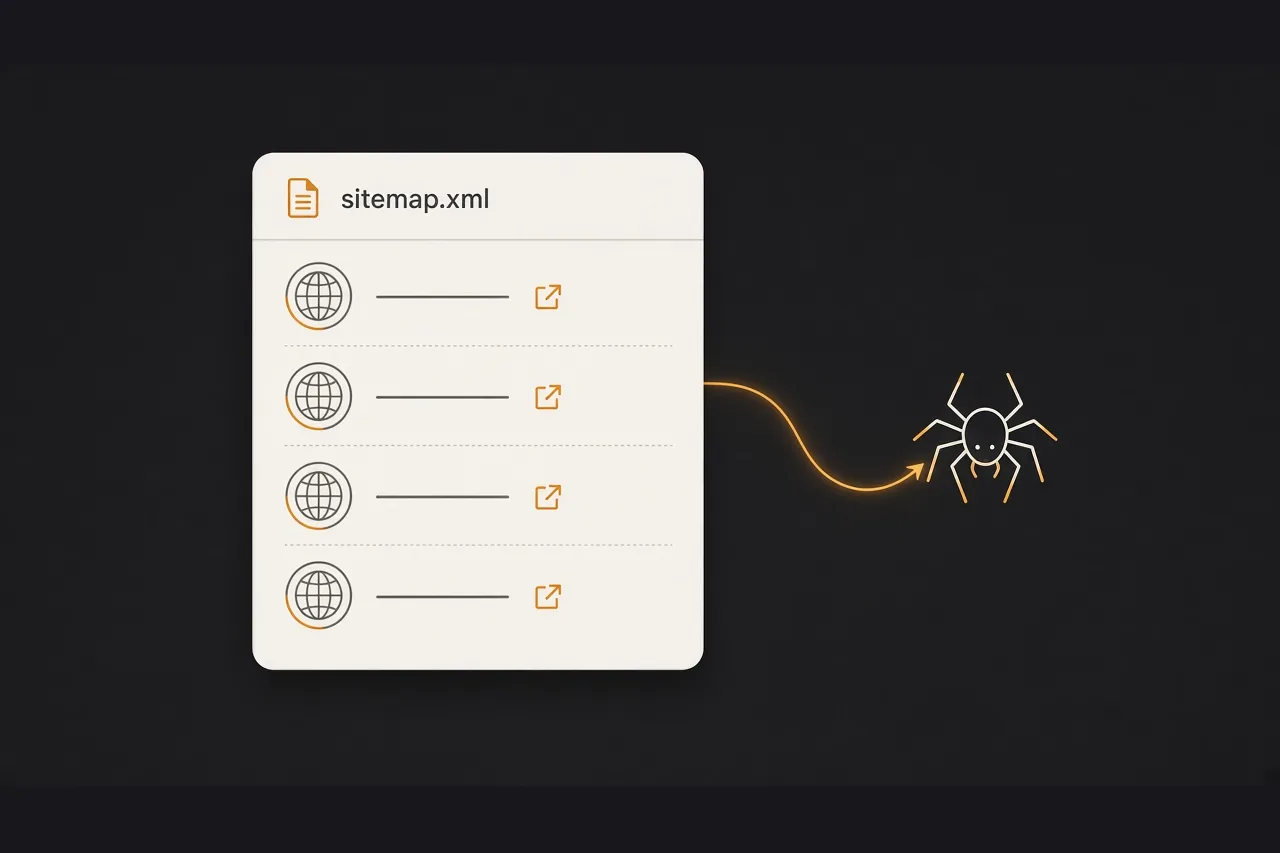
Google's own Search Console shows the exact searches people use to find you. A free WordPress plugin handles your titles, schema and sitemaps. Neither costs a rupee.
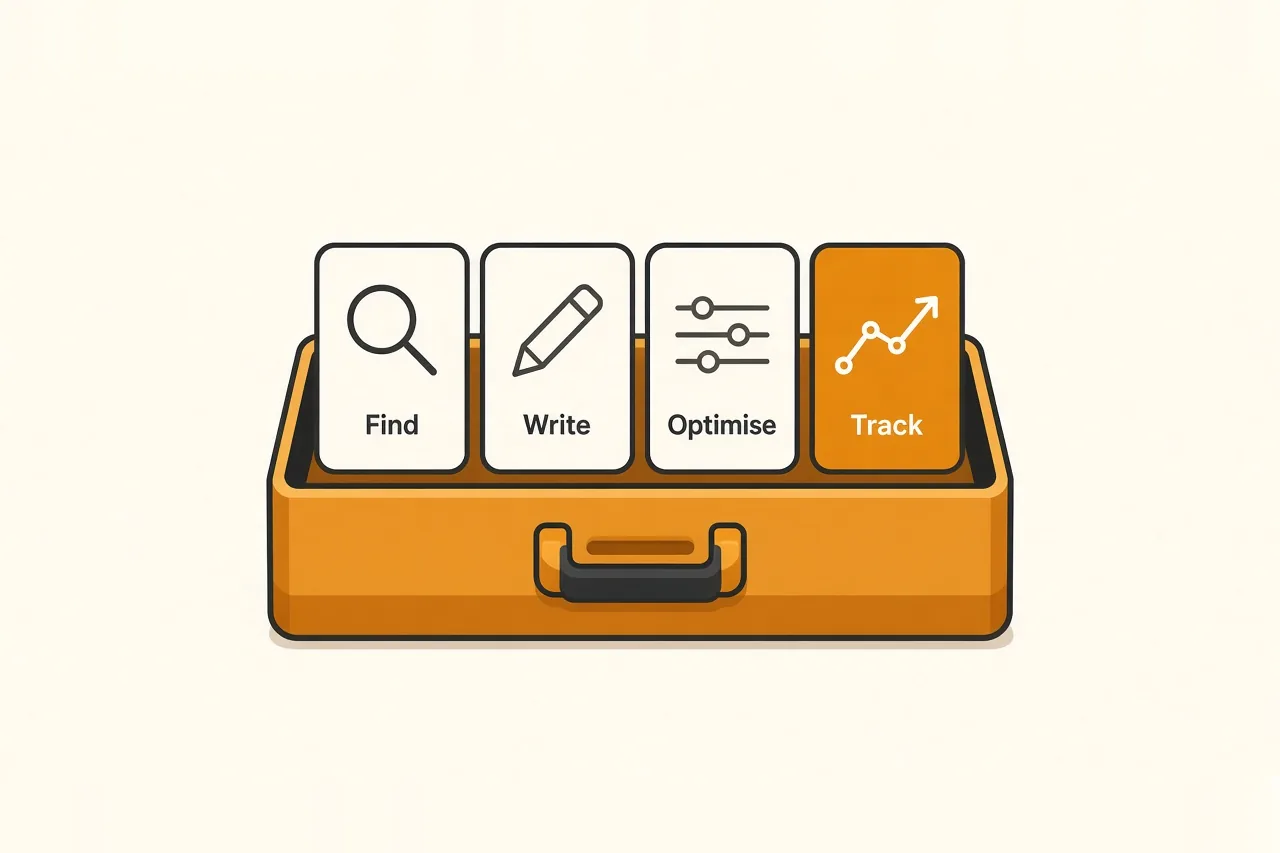
So why does every "best SEO tools" list hand you 25 subscriptions? A list isn't a plan. Bloggers need four jobs done: find keywords, write, optimise and track. Affiliate marketers need a fifth: knowing which programs are worth chasing.
I've picked nine tools by the job they do and what they cost, with every price from the vendor's own pricing page as of 4 October 2026. My pick for each budget is at the end, and the paid tool I'd start with isn't the famous one. (Already down to the big suites? My Semrush vs SE Ranking vs Similarweb comparison goes deeper.)
Some links here are affiliate links. They don't change your price or my verdict.
How I picked these SEO tools
Each tool had to do at least one job a blogger or affiliate marketer does every week, and do it better or cheaper than the alternatives. I left out tools that only agencies or enterprise teams need.
This is a research-based roundup, not a lab test. I compared plans, limits and trial terms on each vendor's official pages, and I say where a figure is the vendor's own claim.
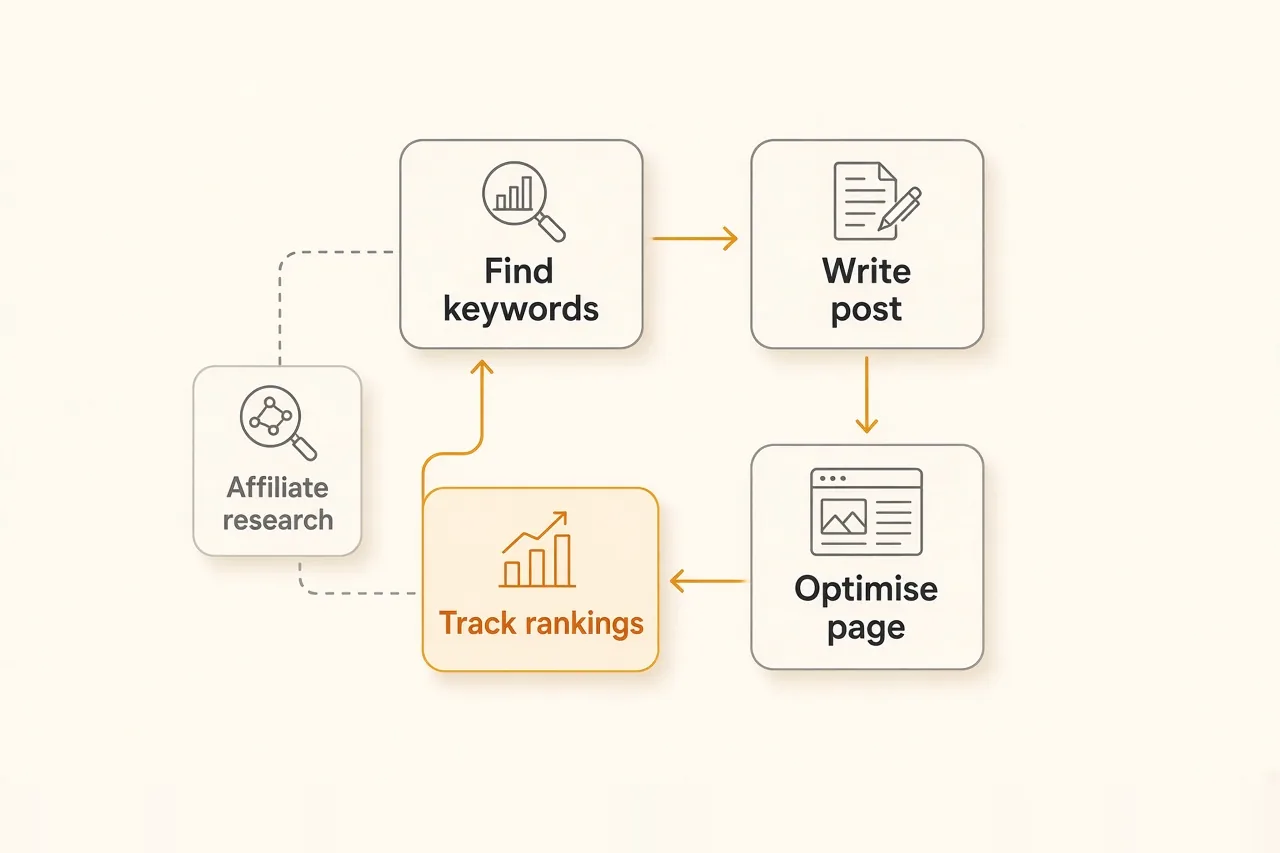
The four jobs, and the tools that cover them:
- Find keywords: SE Ranking, Semrush, Ahrefs, Moz Pro
- Write and optimise: Surfer, NeuronWriter, Rank Math
- Track and fix: Google Search Console, plus the rank trackers in the suites above
- Affiliate research: Similarweb, plus competitor research in the SEO suites
Best SEO tools compared at a glance
| Tool | Main job | Free option | Paid from (monthly billing) | Paid from (annual billing) |
|---|---|---|---|---|
| Google Search Console | Your real Google data | Free | Free | Free |
| SE Ranking | All-in-one SEO | 14-day trial, no card | $129 | $103.20 a month |
| Semrush | All-in-one SEO, deepest data | Free plan, 10 reports a day | $139 | $117.33 a month |
| Ahrefs | Backlinks and site research | Ahrefs Free for your own site | $29 (Starter) | Up to 17% off |
| Similarweb | Traffic and affiliate research | Free sample data, 7-day trial | $199 | $125 a month |
| Rank Math | On-page SEO for WordPress | Free plugin | Annual only | €7.99 a month |
| Surfer | Content optimisation | No | Not listed | $49 a month |
| NeuronWriter | Budget content optimisation | 7-day trial | $23 | $19 a month |
| Moz Pro | Keyword research and Domain Authority | Free trial and free community account | $49 (single site) | $79 a month (Standard) |
Prices are list prices from each vendor's pricing page, as of 4 October 2026. Rank Math is in euros, excluding VAT.
The 9 best SEO tools for bloggers and affiliate marketers
1. Google Search Console — your real data, free
Google Search Console is Google's own free service for monitoring how your site appears in Google Search. Every other tool on this list estimates your traffic. Search Console reports what Google actually recorded: the queries, impressions, clicks and average position for each page.
It's also where you find out about problems first. Google emails you when it finds indexing or security issues, and the URL Inspection tool shows how Google crawled and indexed any page.
Standout features:
- Performance report with real queries, clicks, impressions and position
- Sitemap and URL submission
- URL Inspection for crawl and index status
- Core Web Vitals and indexing reports, with email alerts
| Pros | Cons |
|---|---|
| Free, and the data comes from Google itself | Only shows your own verified sites |
| Shows the exact queries that bring you clicks | No competitor research or keyword volumes |
| Flags indexing and security issues by email | Google Search only, no other engines |
My take: set this up before you pay for anything. If your Elementor site feels slow, its Core Web Vitals report tells you which pages Google flags.
2. SE Ranking — best-value all-in-one suite
SE Ranking launched in 2013 as a rank tracker and grew into a full SEO platform with keyword research, backlink analysis, site audits and AI search tracking. It says more than a million SEO professionals have used it, and its team works from hubs in Kyiv, Wrocław and Warsaw.
Its 2026 pricing has two self-serve plans, Core and Growth. Core is the one most bloggers need.
Standout features:
- 2,000 keywords tracked daily on the Core plan
- Unlimited keyword, competitor and backlink research on Core
- Site audit of up to 250,000 pages a month
- 100 AI prompts tracked daily, plus API credits and MCP access
| Pros | Cons |
|---|---|
| Four times Semrush's entry-plan tracked keywords at a lower price | One active session per login, so no account sharing |
| 14-day trial with no card | Smaller keyword database than Semrush, by both vendors' figures |
| Cheap extras: seats from $16, more keywords from $22.40 | No budget tier; plans now start at $129 a month |
3. Semrush — the deepest SEO data
Semrush was founded in 2008 by Oleg Shchegolev and Dmitri Melnikov and became one of the best-known names in SEO software. Adobe completed its acquisition of Semrush on 28 April 2026, so it's now part of Adobe.
Its database is the largest of the tools here. Semrush says it holds 28.8 billion keywords across 142 country databases and 43 trillion backlinks.
Standout features:
- Keyword research, competitor analysis, Position Tracking and Site Audit on every paid plan
- AI visibility tracking from the $199 Starter plan, with 50 prompts a day
- Optional Traffic & Market toolkit for traffic estimates on any site
- Free plan with 1 demo project and 10 reports a day
| Pros | Cons |
|---|---|
| The biggest keyword and backlink database here | The $139 SEO plan tracks only 500 keywords on 5 sites |
| Usable free plan for occasional checks | Extra users from $45 a month each |
| One login for SEO, content, local and traffic data, some as paid toolkits | Exports are disabled during the 7-day trial |
Torn between Semrush and SE Ranking? My side-by-side comparison of Semrush, SE Ranking and Similarweb runs the numbers on tracked keywords, add-ons and a full year's cost.
4. Ahrefs — strongest for backlink research
Ahrefs is a bootstrapped company based in Singapore that started in SEO. It says it has 15 years of crawling the web behind its data, and backlink research is what it's best known for.
What surprises most bloggers is the free tier. Ahrefs Free, formerly Ahrefs Webmaster Tools, gives limited Site Explorer and Site Audit access for sites you verify you own.
Standout features:
- Site Explorer for backlinks, referring domains and top pages
- Keywords Explorer and Rank Tracker on paid plans
- Ahrefs Free for your own verified sites
- API and MCP access on Lite and up
| Pros | Cons |
|---|---|
| Free audit and backlink data for your own site | Lite starts at $129 a month for 750 tracked keywords |
| $29 Starter plan for light use | Lite includes one user and 1,000 credits per user |
| Strong backlink and site research | Ahrefs says it generally doesn't issue refunds |
5. Similarweb — best for affiliate research
Similarweb was founded by Or Offer and trades on the New York Stock Exchange as SMWB. It isn't an SEO suite first. It estimates how much traffic any website gets, and from which channels, by blending panel data, connected analytics, partner data and public web data.
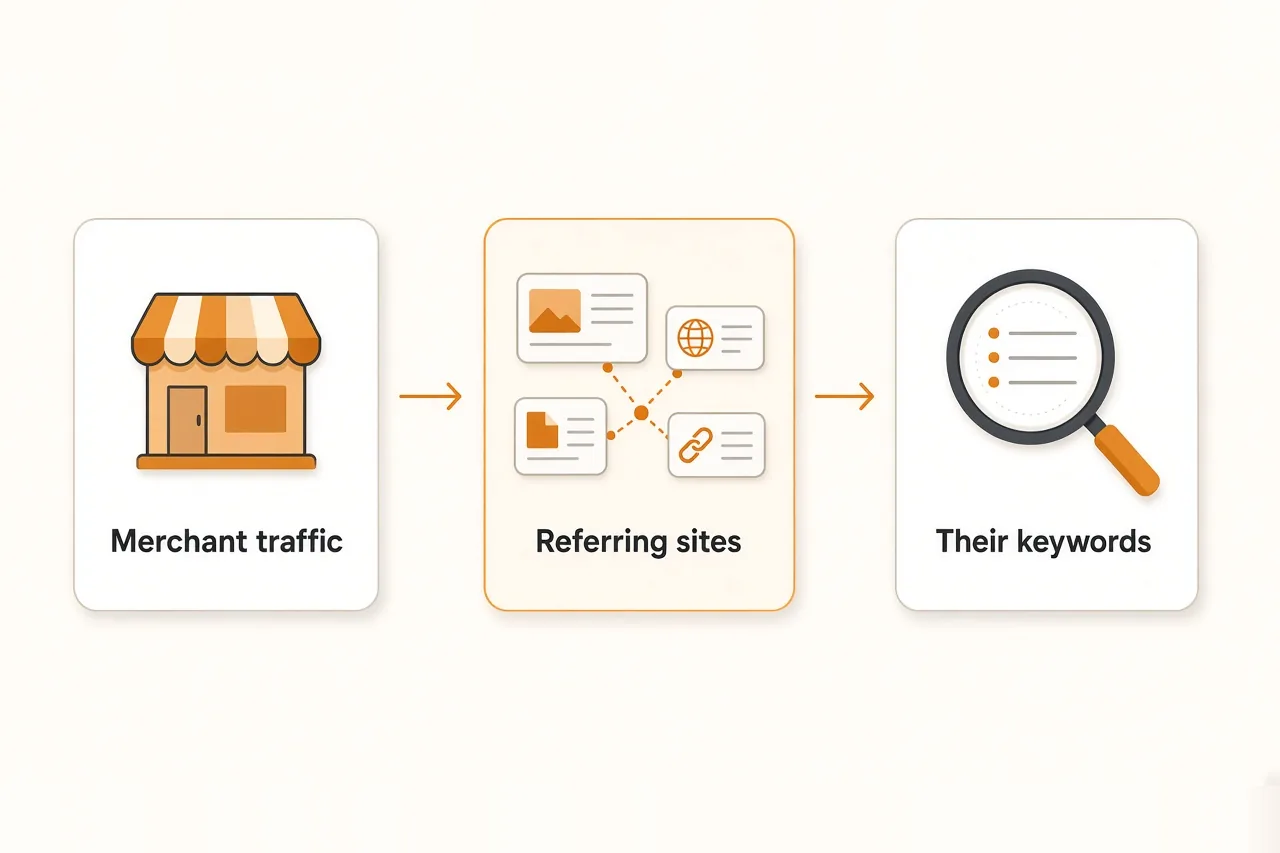
For affiliate marketers, the April 2026 update matters. Similarweb added Affiliates as its own traffic channel, next to Referrals, Gen AI and paid social.
Standout features:
- Marketing Channels report with a dedicated Affiliates channel
- Traffic Sources view listing the sites that send visits
- Compare up to five sites side by side
- Free high-level data on similarweb.com
| Pros | Cons |
|---|---|
| Shows how much of a merchant's traffic comes from affiliates | No rank tracker or site audit on the $199 entry plan |
| Covers every channel, not just search | Needs enough traffic to estimate a site, so small blogs may show nothing |
| Steep annual discount: $125 instead of $199 | 7-day trial needs a card and bills automatically |
6. Rank Math — on-page SEO inside WordPress
Rank Math is a WordPress SEO plugin from the MyThemeShop team, publicly released in 2018. Rank Math says it has more than 4 million users and over 7,000 five-star reviews on WordPress.org.
The free version already covers what most blogs need: titles and meta descriptions, XML sitemaps, schema, redirects and a 404 monitor. PRO adds rank tracking, built on your own Search Console data.
Standout features:
- Free plugin with sitemaps, schema, redirects and on-page analysis
- Google Search Console integration inside WordPress
- PRO: 500 tracked keywords and unlimited personal sites
- llms.txt generator and internal linking suggestions
| Pros | Cons |
|---|---|
| The free version covers most blogs' on-page SEO | WordPress only |
| PRO covers unlimited sites you fully own | PRO rank tracking stops if Google's API access ends, by Rank Math's own FAQ |
| 30-day no-questions refund on new purchases | PRO licences are for sites you fully own; client sites need Business |
If your site is still on slow hosting, fix that first. My guide to affordable WordPress hosting covers the hosts I'd pick.
7. Surfer — content optimisation for serious publishers
Surfer is built by Surfer Sp. z o.o. in Wrocław, Poland, and says more than 150,000 customers in 159+ countries use it. Its Content Editor scores your draft against the pages already ranking and suggests terms, headings and length.
It has also moved into AI search, tracking how often AI models mention your brand.
Standout features:
- Content Editor with a live Content Score
- AI writing assistant and humanizer
- One-click internal linking
- AI visibility tracking, with prompt quotas that grow by plan
| Pros | Cons |
|---|---|
| Clear, competition-based guidance while you write | No free plan |
| Covers content writing and AI visibility in one tool | Annual plans are paid upfront |
| Surfer says it works in all languages | Pricier than NeuronWriter for the same core job |
8. NeuronWriter — budget content optimisation
NeuronWriter is made by Conti sp. z o.o., based in Zamość, Poland. It does the same core job as Surfer, scoring your draft against top-ranking pages, for less money.
The Bronze plan covers a solo blogger. Gold adds Search Console, WordPress and Shopify integrations, plus plagiarism checks.
Standout features:
- Content writer analyses that score drafts against the top results
- AI credits and templates for drafting
- Content plan for organising topics
- Gold plan: GSC and WordPress integrations, plagiarism checks, API
| Pros | Cons |
|---|---|
| Cheapest content optimiser here, from $19 a month | Bronze allows only 25 analyses a month on 2 projects |
| 7-day free trial on Gold plan terms | Integrations start on the $69 Gold plan |
| 30-day refund on your first plan | Team sharing and plagiarism checks start on Gold |
9. Moz Pro — Domain Authority and keyword research
Moz was founded in 2004 as SEOmoz by Rand Fishkin and Gillian Muessig, renamed Moz in 2013, and became part of Ziff Davis through iContact in 2021. Domain Authority, the link metric you'll see on countless media kits and guest-post pitches, is Moz's own creation.
Moz Pro covers keyword research, rank tracking, site crawls and AI prompt tracking. Its pricing page also mentions a $49 entry plan for one website.
Standout features:
- Keyword Explorer and Link Explorer
- Domain Authority, Page Authority and Brand Authority metrics
- 150 tracked AI prompts on Standard
- MozBar Premium Chrome extension
| Pros | Cons |
|---|---|
| Domain Authority, Page Authority and Brand Authority built in | Standard tracks 300 keywords on 3 sites |
| $49 entry option for a single site | Extra seats cost $49 a month each |
| Free community account with limited research | Overages aren't included in plan prices |
What should your SEO stack cost at each stage?
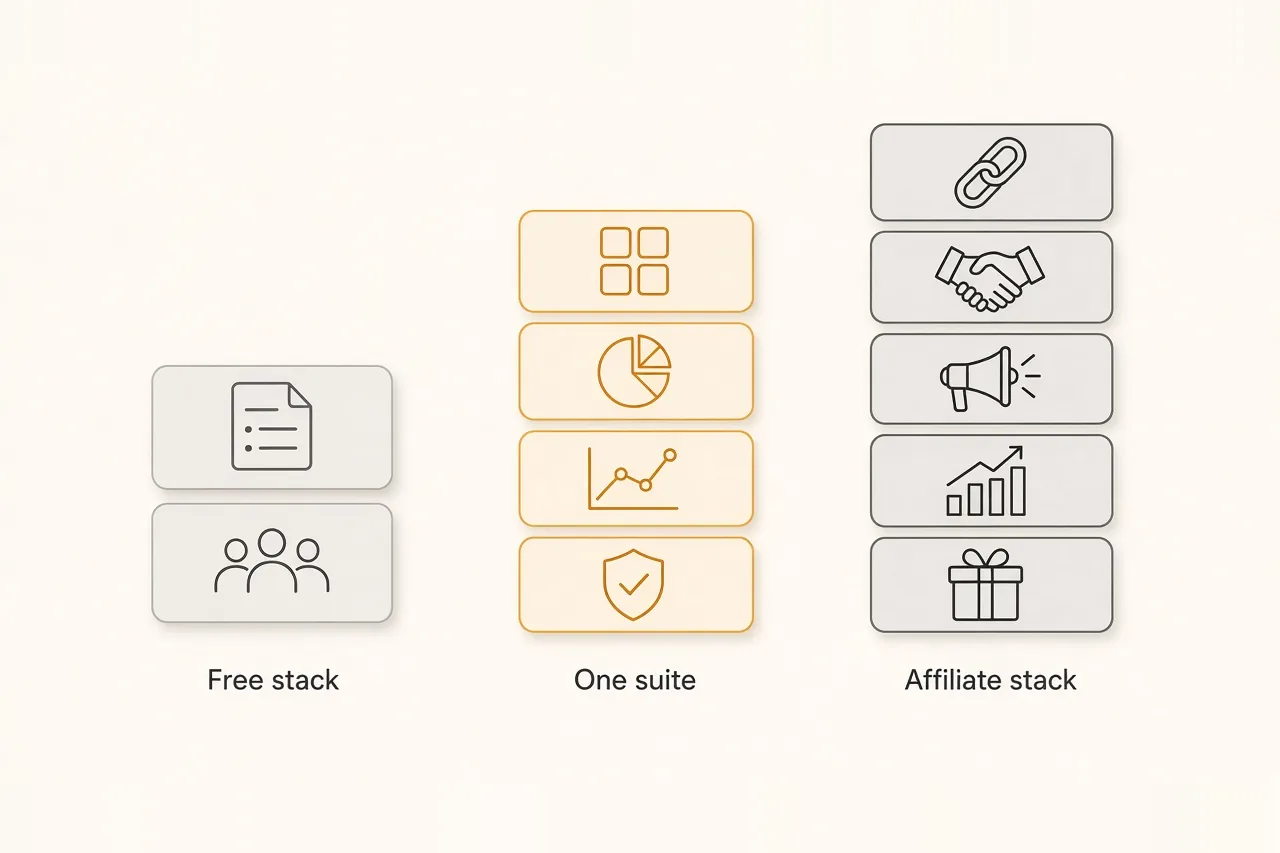
Here's the part most lists skip: how these tools fit together, and what you'd pay. The totals are my arithmetic on the list prices above, on annual billing.
| Stage | Tools | Monthly cost |
|---|---|---|
| New blog | Search Console + Rank Math free + Ahrefs Free | $0 |
| Growing blog | The free stack + SE Ranking Core | $103.20 |
| Content-heavy blog | Growing stack + NeuronWriter Bronze | $122.20 |
| Affiliate site | Growing stack + Similarweb Competitive Intelligence | $228.20 |
A new blog doesn't need a $100 tool. Until Google sends you real impressions, Search Console's query data is more useful than any estimate, and the hours go further into writing and site speed.
Not sure what to research with the free stack? My step-by-step keyword research guide for bloggers works with free Google tools, and the same steps apply when you add a paid suite.
Upgrade when you're publishing every week and want to research competitors. That's the point where an all-in-one suite pays for itself.
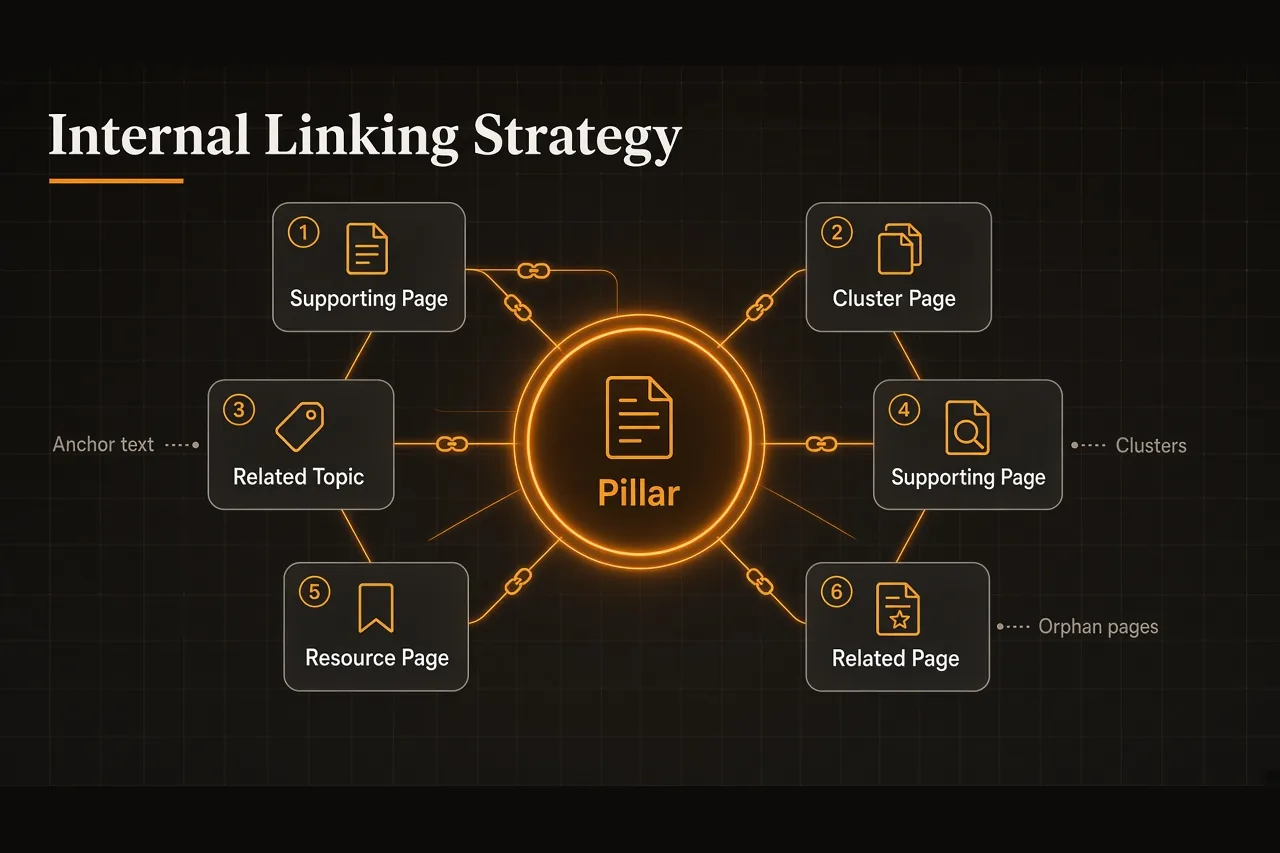
A suite won't build authority on its own, though. My guide to building topical authority shows how to turn the keywords it finds into hub-and-spoke clusters with solid internal links.
Which SEO tool is best for affiliate marketers?
Affiliate marketers need SEO data and something extra: proof that a program is worth the work.
Here's the research loop I'd run before writing a single review:
- Check the merchant in Similarweb to see how much traffic comes from affiliates and referrals.
- Open the Traffic Sources view to find the review sites and blogs already sending it visitors.
- Put those sites into SE Ranking or Semrush to see which keywords and pages earn their organic traffic.
- Track the keywords you can realistically win, and watch Search Console for your first impressions.
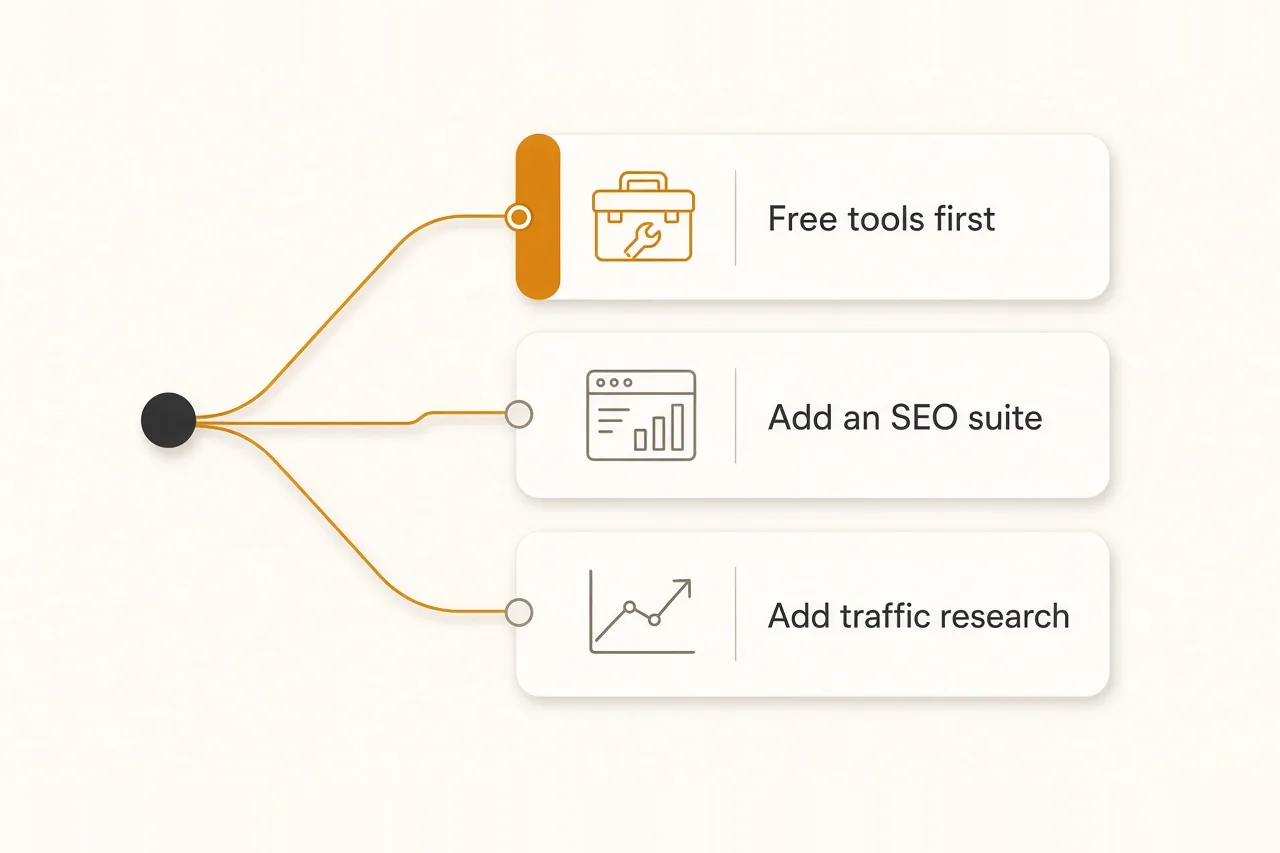
If you can only afford one paid tool, choose the SEO suite. You can't rank with traffic data alone. Add Similarweb when choosing programs becomes a regular part of the work.
Which SEO tools should you skip?
Skip the paid suites if your blog is under a few months old. Search Console, Rank Math and Ahrefs Free cover the basics, and no tool makes up for posts you haven't written yet.
Skip Similarweb if you write about topics rather than merchants. It shines when you choose between affiliate programs, and it adds little for a hobby blog or an AdSense site.
Skip content optimisers if you're new to writing. Learn to answer the reader's question first. Surfer or NeuronWriter help most when you're publishing at volume and want consistency.
Skip Moz Pro unless you specifically want Moz's Domain Authority metrics. SE Ranking gives you more tracking for the money.
My pick for each budget
For a new blog, the free trio wins: Google Search Console, Rank Math's free plugin and Ahrefs Free. That covers your real search data, on-page SEO and a site audit for $0.
For your first paid tool, I'd pick SE Ranking over Semrush. Core tracks 2,000 keywords on 10 projects for $103.20 a month on annual billing, against Semrush's 500 keywords on 5 sites for $117.33. Semrush's bigger database is worth it later, on its higher plans.
For affiliate sites, add Similarweb's Competitive Intelligence plan when you're choosing programs. Its Affiliates channel answers a question the SEO suites can't.
If you write a lot with AI, my list of AI tools for content creators pairs well with NeuronWriter or Surfer for the optimisation step.
Frequently asked questions
If you're ready for your first paid SEO tool, start with SE Ranking's 14-day trial. It needs no card, and two weeks is enough to set up tracking and see your competitors' keywords.