Most people pick an ElevenLabs plan by looking at the price column, then get surprised by the bill. The prices are not the confusing part. The credit system is.
ElevenLabs sells you credits, but a credit is not a fixed amount of speech. Switch models and the same script costs half as much — or twice as much. Generate through the API instead of the dashboard and the arithmetic changes again. That is where the surprise comes from.
Here is what each plan actually costs, what a credit really buys, and how to work out your own number before you commit. I have been paying for Creator for a year running a voice pipeline through n8n, so the workflow notes are from use rather than the pricing page.
The short answer
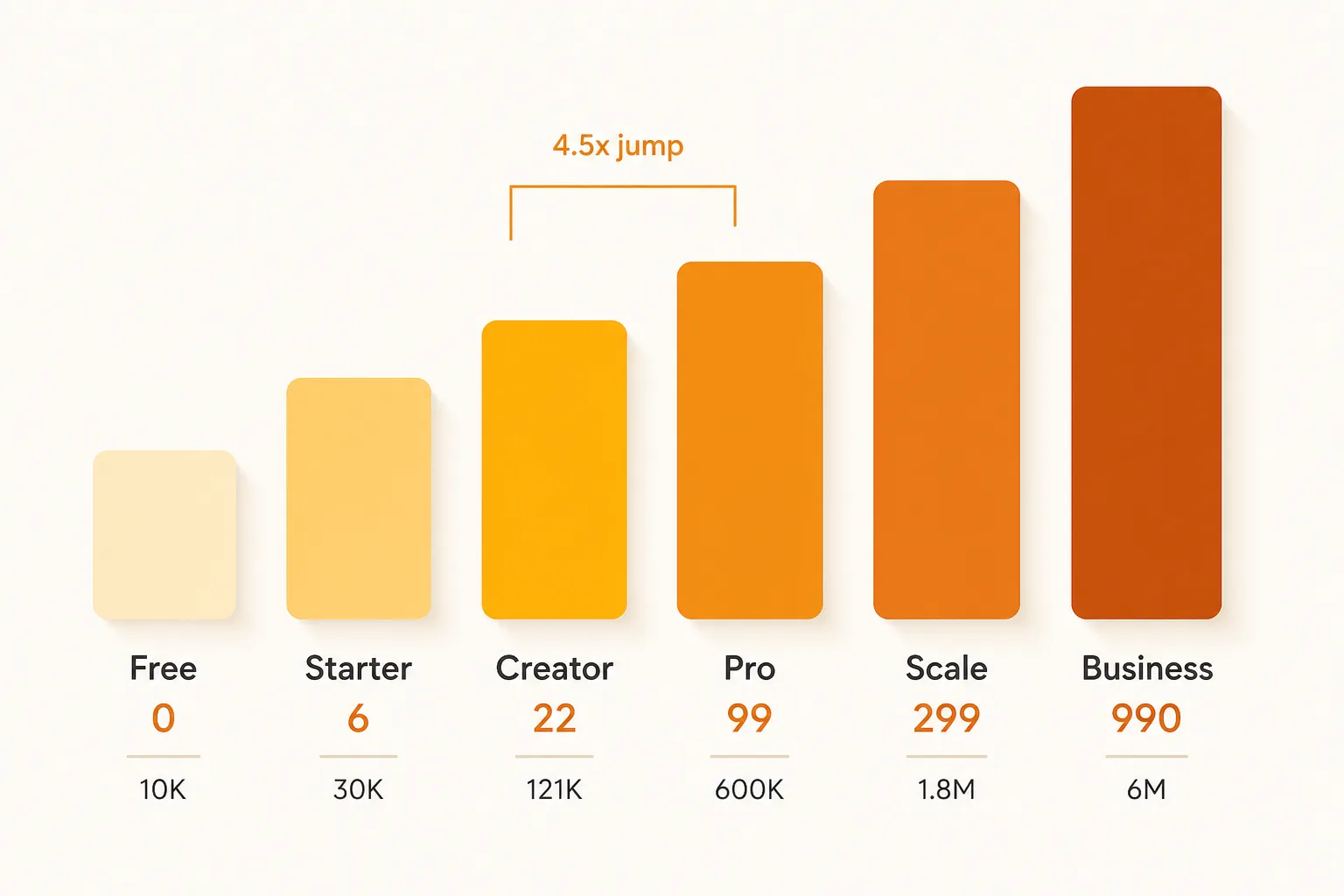
As of August 2026, ElevenLabs runs six paid tiers plus a free one.
| Plan | Monthly | Annual (per month) | Credits / month | Voice slots |
|---|---|---|---|---|
| Free | $0 | $0 | 10,000 | 2 |
| Starter | $6 | $5 | 30,000 | 3 |
| Creator | $22 | $18.33 | 121,000 | 5 |
| Pro | $99 | $82.50 | 600,000 | 10 |
| Scale | $299 | $249.17 | 1,800,000 | 15 |
| Business | $990 | $825 | 6,000,000 | 25 |
| Enterprise | Custom | Custom | Custom | Custom |
Annual billing saves roughly 17% across the board. Creator is where most solo creators land, and it is the first tier with professional voice cloning.
How credits actually work
This is the part worth understanding, because it decides your real cost more than the plan you pick.
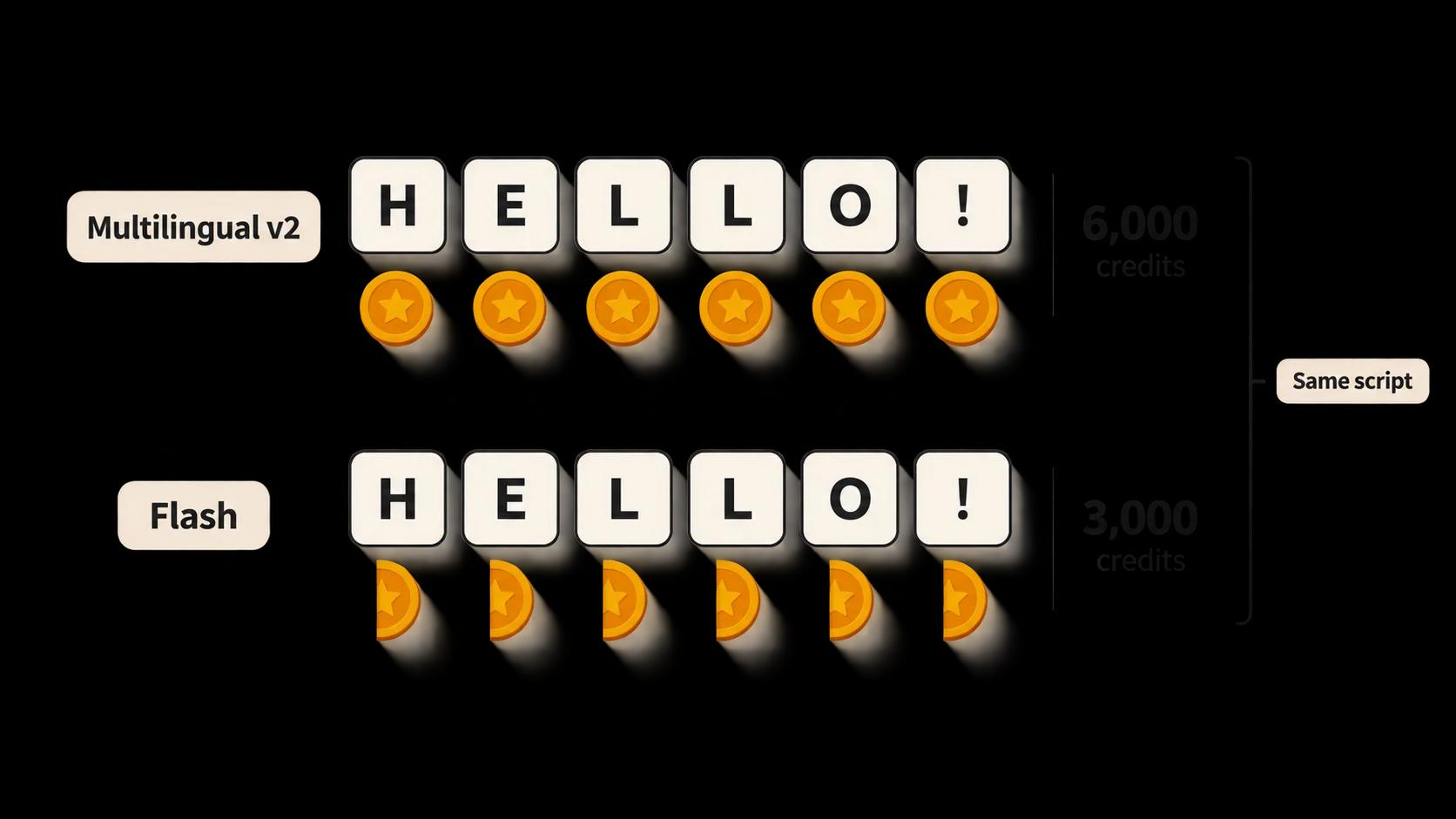
The base rule: one character of text is one credit on the Multilingual v2 model. A 6,000-character script is 6,000 credits.
The exception that matters: Flash and Turbo models bill at half a credit per character. The same 6,000-character script costs 3,000 credits. Same script, same voice slot, half the spend — the difference is latency and a small quality trade-off, not the amount of speech you get.
So the honest way to read the plan table is not "121,000 credits". It is "121,000 characters on Multilingual v2, or 242,000 on Flash".
What that means in minutes
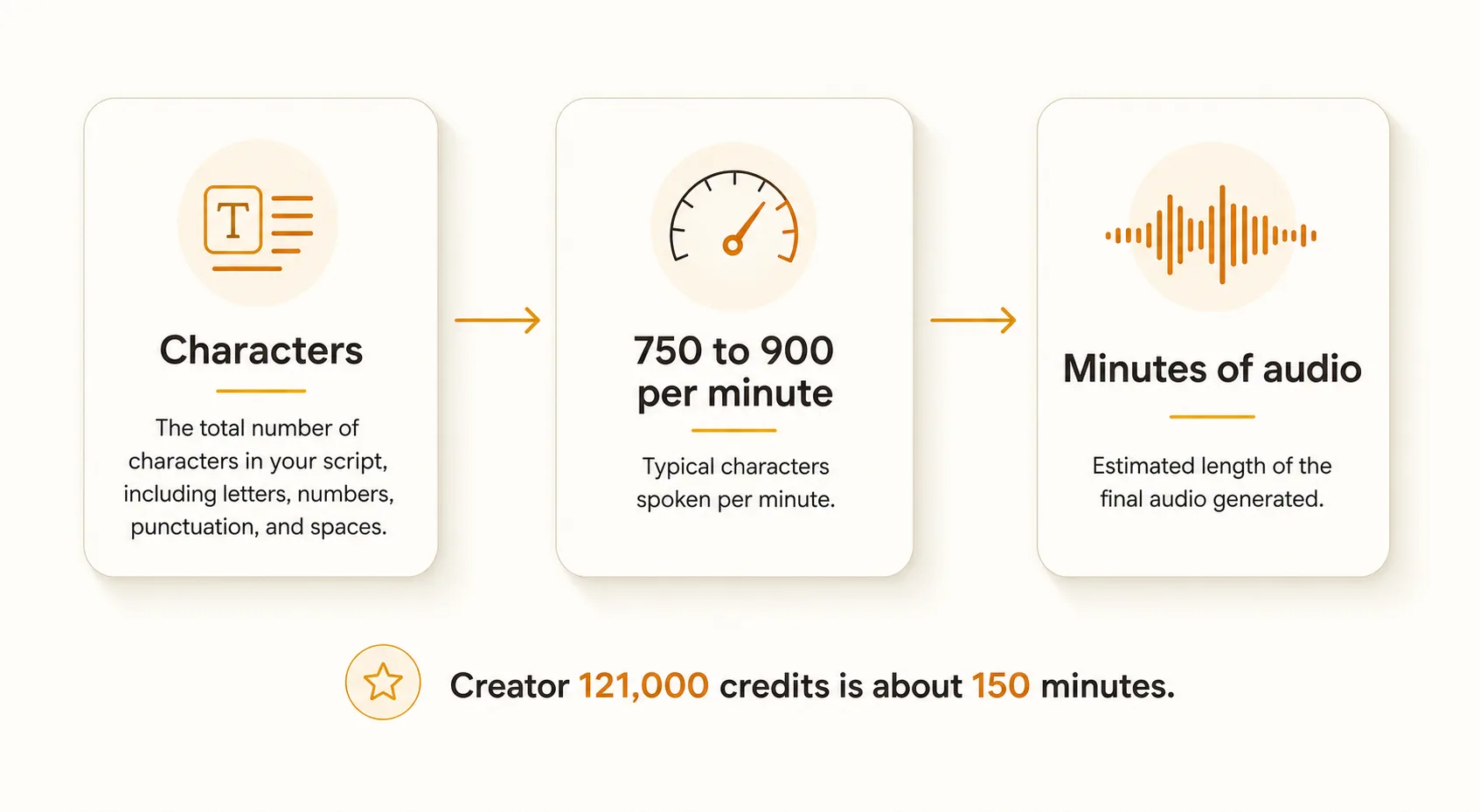
Speech runs roughly 750 to 900 characters per minute of finished audio, depending on pacing and how much punctuation you use.
- On Multilingual v2, Creator's 121,000 credits is somewhere near 140 to 160 minutes of audio.
- On Flash, the same allocation stretches to roughly 280 to 320 minutes.
ElevenLabs publishes higher minute figures than that on its own pricing page. Treat those as a best case with short, clean input, and plan against the lower number.
What it costs for real work
Abstract credits are hard to reason about. Here are three jobs with the arithmetic done, using the API per-character rates because those are unambiguous.
| Job | Characters | Multilingual v2 | Flash |
|---|---|---|---|
| One 1,200-word article read aloud | ~7,000 | $0.70 | $0.35 |
| A 10-episode podcast season, 20 min each | ~160,000 | $16.00 | $8.00 |
| 200 short-form video voiceovers, 45 sec each | ~112,000 | $11.20 | $5.60 |
Two things fall out of that table.
The first is that model choice is worth more than plan choice. Moving a steady workload from Multilingual v2 to Flash halves the bill without changing tiers. If your use case tolerates Flash — most short-form and draft work does — that is the single biggest lever you have.
The second is that ElevenLabs is cheap until it is not. A creator publishing a few videos a week will never leave Creator. A team generating a library of long-form audio hits Pro quickly, and the jump from $22 to $99 is the steepest step in the range.
API pricing is a separate calculation
If you are calling ElevenLabs from code rather than the dashboard, the rates are published per unit rather than per credit. This is the pricing I would use for any planning, because it does not require the credit conversion.
| Service | Rate |
|---|---|
| Text to speech, v3 and v2 Multilingual | $0.10 per 1,000 characters |
| Text to speech, v3 Conversational and Flash / Turbo | $0.05 per 1,000 characters |
| Speech to text, Scribe v2 | $0.22 per hour |
| Speech to text, realtime | $0.39 per hour |
| Dubbing v1 | $0.33 per minute |
| Dubbing v2 | $2.20 per minute |
| Voice changer | $0.12 per minute |
| Sound effects | $0.12 per minute |
Concurrency scales with your tier — roughly 4 concurrent speech calls on Starter up to 40 on Business. That limit, not the credit balance, is usually what breaks a batch job first. If you are generating a hundred clips in a loop, you will hit concurrency long before you run out of credits.
If you are wiring this into an automation rather than calling it by hand, the mechanics are the same as any other paid API — see what an API actually is if that part is new, and the n8n workflow examples for the batching and rate-limit patterns that keep a job from failing at clip 60.
If the voice is going onto an avatar or presenter video, you may not need an ElevenLabs account at all. Hedra's API resells Multilingual v2 and v3 at the same 10¢ per 1,000 characters, and Flash at an equivalent rate, so the voice and the face can come off one wallet — the per-second video costs are in my Hedra pricing breakdown.
The free tier has a catch worth knowing
Free gives you 10,000 credits a month, which is genuinely enough to evaluate the voices properly. It does not give you a commercial licence.
That means anything you generate on the free tier cannot legally go into a monetised video, a client deliverable, or a product. Starter at $6 is the cheapest tier that includes commercial rights, and for anyone publishing anything it is the real floor — not free.
This is the mistake I see most often: someone evaluates on free, likes it, ships a client video, and only reads the licence terms later.
Which plan should you actually pick
- Evaluating the voices, publishing nothing yet: Free. Ten thousand credits is plenty to judge quality.
- Publishing anything commercially, low volume: Starter at $6. You are paying for the licence more than the credits.
- Solo creator, regular voiceover work, want to clone your own voice: Creator at $22. Professional voice cloning starts here, and this is where most people should be.
- Long-form audio, a content team, or an API workload: Pro at $99. The jump is steep, so first check whether switching to Flash keeps you inside Creator.
- Agency or product with real volume: Scale at $299 for the seats and concurrency, not the credits.
If you are picking ElevenLabs as part of a wider creator stack rather than in isolation, my best AI tools for content creators piece covers what pairs well with it.
Where ElevenLabs pricing falls short
The honest criticisms, because a pricing guide that only praises the product is a brochure.
The credit system is harder to reason about than it needs to be. Two official pages present the same plans in different units, and the per-minute figures assume conditions most real scripts do not meet. You end up doing arithmetic that the vendor could have done for you.
Credits do not roll over. Unused allocation is gone at the end of the cycle, which punishes anyone with lumpy output — a month of heavy production followed by a quiet one costs the same as two steady months, and the quiet month is wasted.
The Creator-to-Pro gap is wide. $22 to $99 with nothing between them means a creator who outgrows Creator by a little pays 4.5x for headroom they will not use for months.
And voice cloning quality is genuinely good, which makes the licensing terms worth reading properly rather than skimming. What you may do with a cloned voice is narrower than what the product will let you generate.
Frequently asked questions
If you take one thing from this: the model you generate with moves your bill more than the plan you sit on. Work out your monthly character count, decide whether Flash is good enough for the bulk of it, and pick the smallest tier that covers the result. Most people over-buy the plan and under-use the cheaper model.
Start on Free to judge the voices, then move to Starter the moment you publish anything commercially — the licence, not the credits, is what you are buying at that tier.
Some links here are affiliate links, at no extra cost to you. The pricing above is ElevenLabs' published rates, as of August 2026.