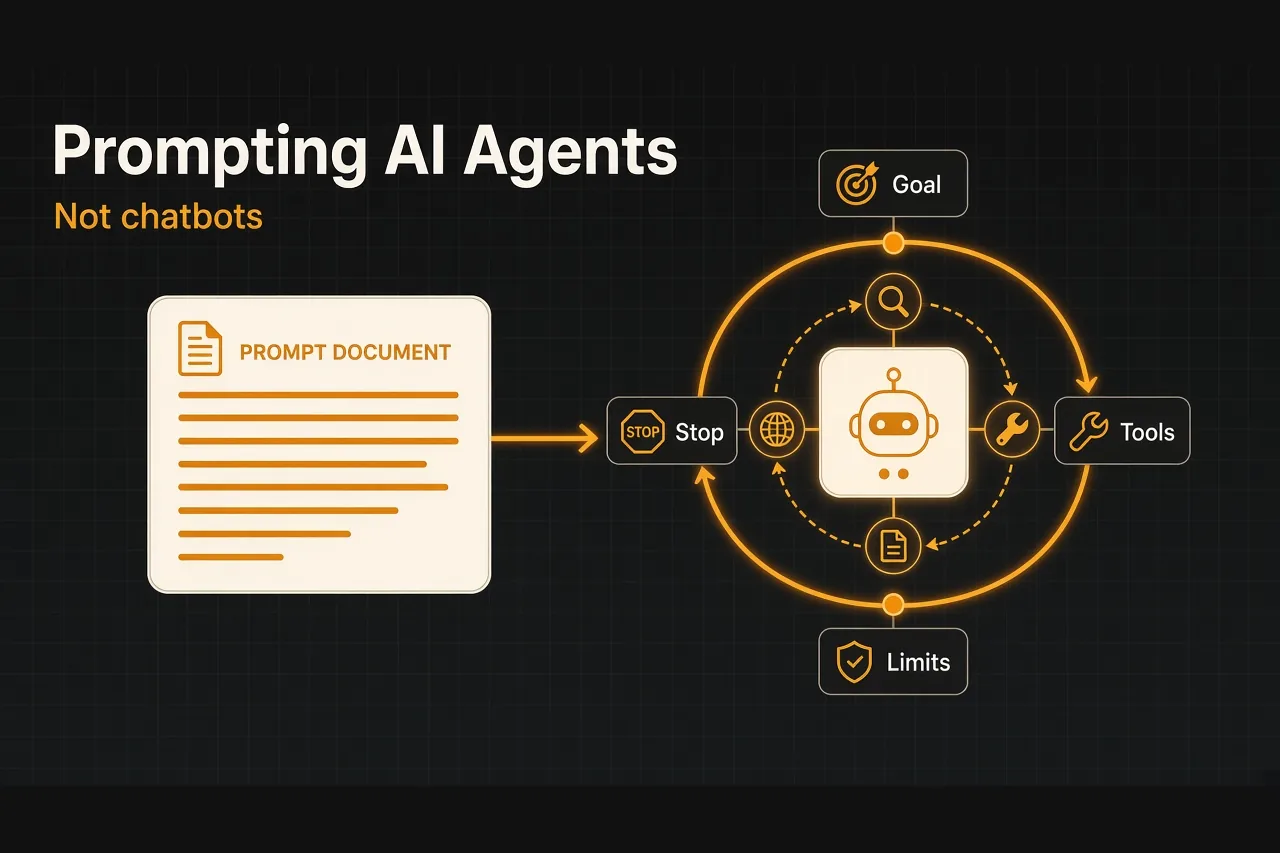
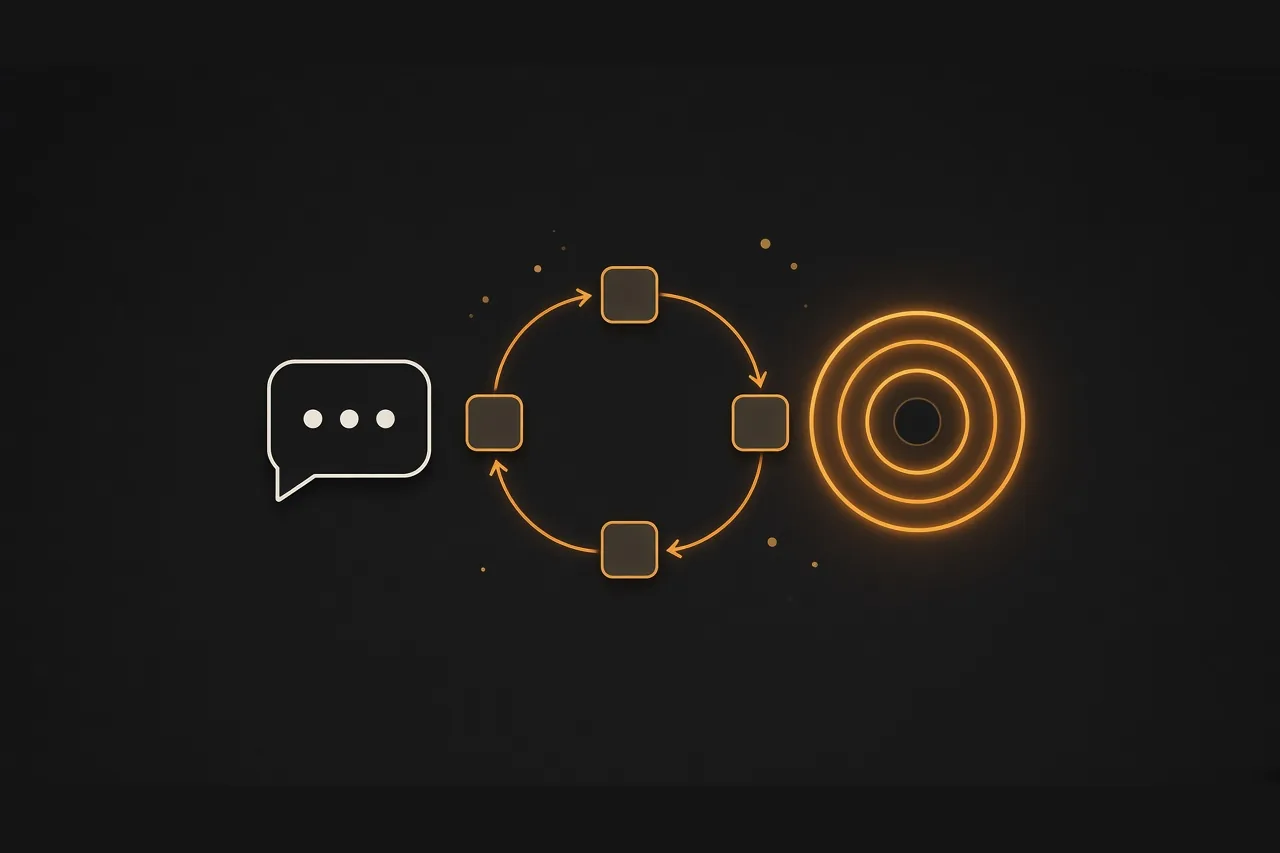
Here's the idea in a sentence: loop engineering is the craft of designing and refining the repeating cycle an AI system runs through — think, act, observe, repeat — so that a model that can only answer once becomes an agent that can pursue a goal until it's done. A single prompt gives you an answer. A well-engineered loop gives you an outcome. And in 2026, as AI has shifted from chatbots to autonomous agents, that loop has quietly become the most important thing to get right.
If prompt engineering was about writing the perfect instruction, loop engineering is about designing the perfect process — how the AI reasons, uses tools, checks its own work, remembers what it learned, and knows when to stop. I've built agent loops that shipped real work and watched others spin in expensive circles, and the difference is almost never the model. It's the loop. This guide explains what loop engineering is, why it matters, the anatomy of an AI loop, the patterns that work, and the failure modes to design around — clearly, and from the ground up.
From prompts to loops: why this matters now
For the first few years of the generative-AI era, we interacted with models one turn at a time. You wrote a prompt, the model wrote a response, and that was the whole transaction. The skill that mattered was prompt engineering: phrasing your request so the single answer came back good.
But a single answer can't book a trip, debug a codebase, or research a market. Those are multi-step goals, and multi-step goals need iteration — try something, see what happened, adjust, try again. So the frontier moved from asking a model a question to putting a model inside a loop: letting it take an action, observe the result, and decide what to do next, over and over, until the goal is met.
That shift changed where the difficulty lives. When the AI only speaks once, the prompt is everything. When the AI runs in a loop, the loop is everything — because a hundred small decisions compound, and a flaw that's invisible in one turn becomes a disaster over fifty. Loop engineering is the response to that new reality.
The evolution: prompt → context → loop engineering
It helps to see loop engineering as the third stage in a natural progression, each stage widening the scope of what you're designing.
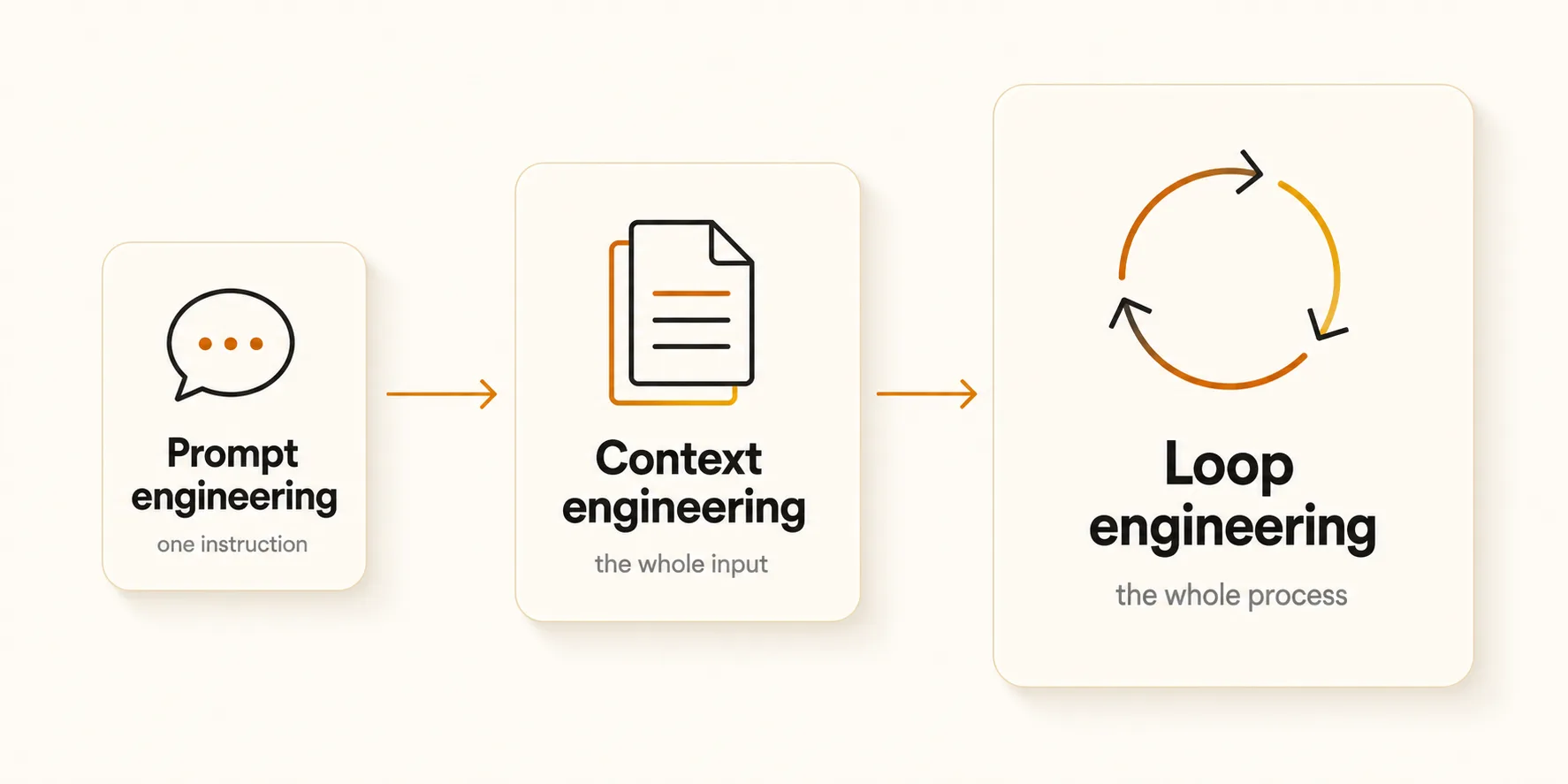
- Prompt engineering — designing a single instruction. Scope: one message. You optimize wording, examples, and format to get one good answer.
- Context engineering — designing everything the model sees at a given moment: the prompt plus retrieved documents, memory, tool definitions, and history. Scope: one turn's full information state. You optimize what goes into the context window.
- Loop engineering — designing the whole repeating process: how the AI moves from turn to turn, what it does each iteration, how state carries forward, and when the loop ends. Scope: the entire journey from goal to result.
Each stage contains the last. A great loop still needs good context at every step, which still needs good prompts. But the highest-leverage design decisions in an agentic system live at the loop level — because that's where behavior, reliability, and cost are actually determined.
The anatomy of an AI loop
Strip any AI agent down to its core and you find the same beating heart: a cycle. The model perceives its current situation, reasons about it, takes an action, observes the result, and folds that result back into its understanding — then goes around again.
New to the term? My guide to what an AI agent is covers the parts, the types and real examples.
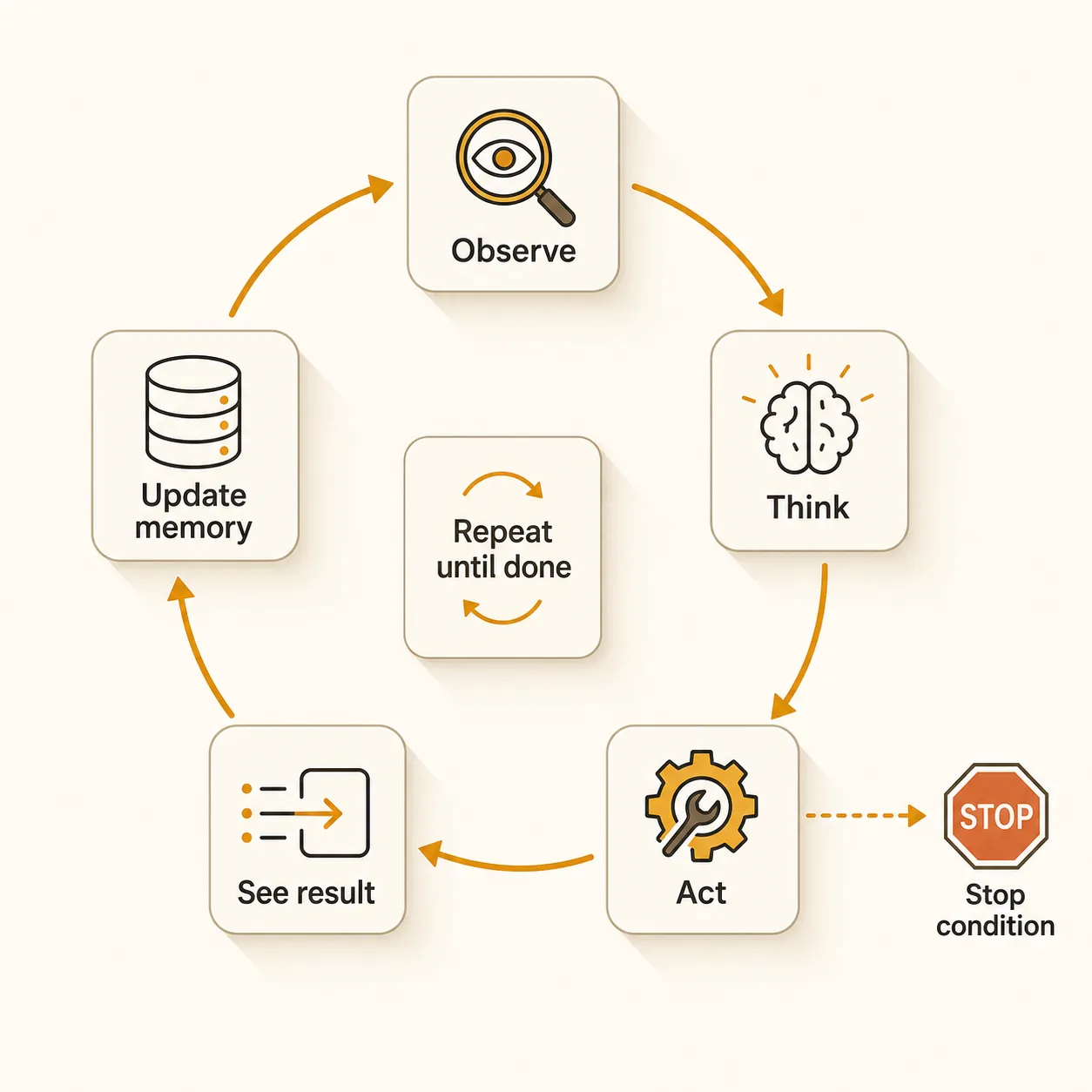
The stages of the loop:
- Observe. The agent takes in its current state — the goal, what it has done so far, and the latest result from the world.
- Think (reason). The model decides what to do next: which step moves it closer to the goal.
- Act. It takes an action — usually calling a tool: searching the web, running code, querying a database, or calling an API.
- Observe the result. The action returns something — data, an error, a confirmation — which becomes new information.
- Update (remember). That result is folded into the agent's state or memory so the next iteration builds on it.
- Check the exit. Before looping again, the agent asks: am I done, stuck, or out of budget?
In plain code, the essence of every agent loop looks like this:
Loop engineering is the work of designing every one of those lines well: what "state" holds, how the model reasons, which actions it can take, how results update memory, and — crucially — the conditions under which the loop ends.
What loop engineering actually involves
If the loop is the machine, loop engineering is designing the machine so it runs reliably. These are the pillars practitioners actually sweat over.
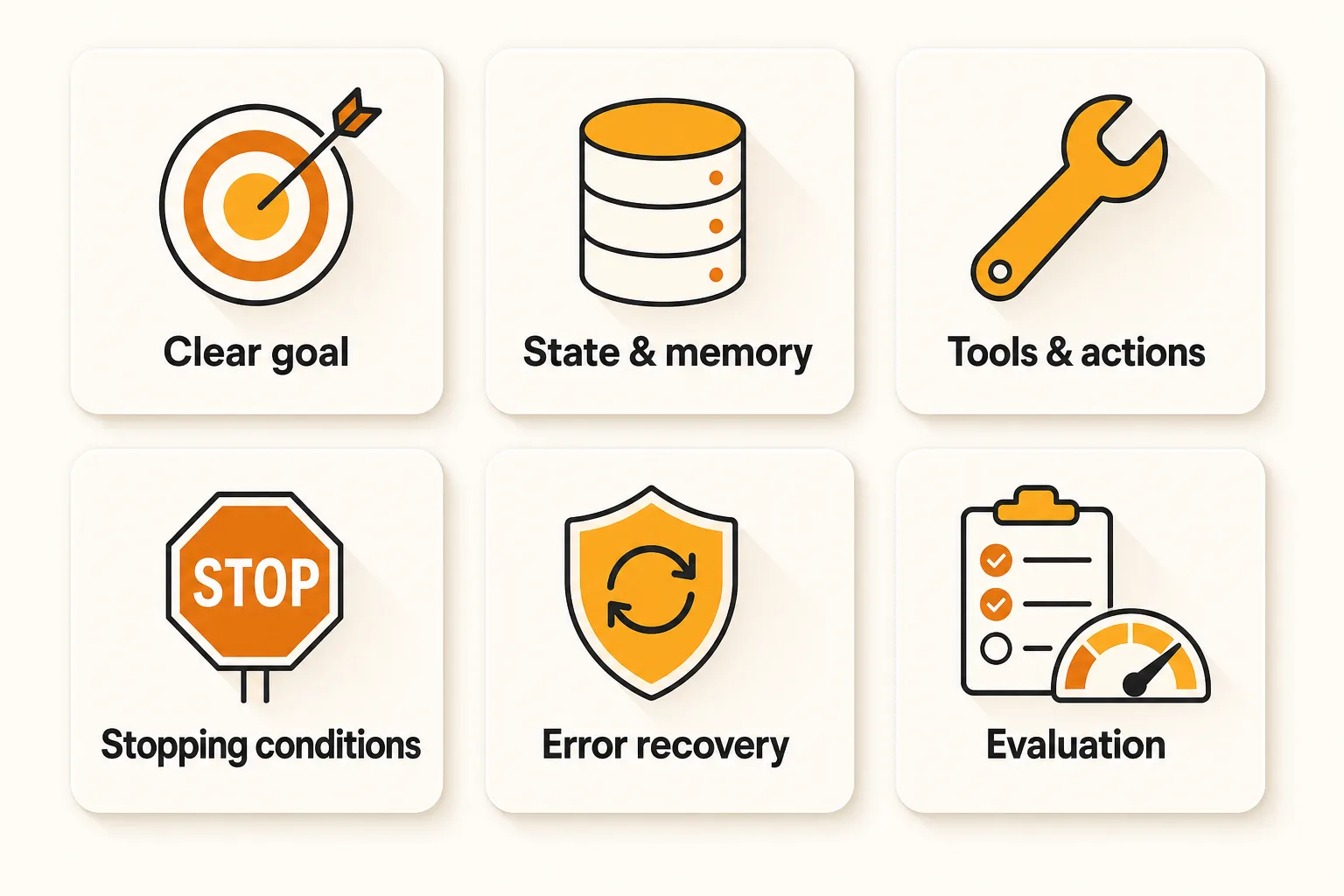
- A clear goal and success criteria. The loop needs to know what "done" means. Vague goals produce loops that wander; sharp success criteria give the agent a target to check itself against.
- State and memory. What carries from one iteration to the next? Too little and the agent forgets what it learned; too much and the context window bloats, slows down, and gets confused. Managing this is central.
- Tools and actions. The set of things the agent can do each turn. Fewer, well-chosen, well-described tools produce far more reliable loops than a giant, ambiguous toolbox.
- Stopping conditions. The most underrated part. A loop needs multiple ways to end: success, a step or token budget, repeated-action detection, and a timeout. Without these, a loop can run forever or burn money in circles.
- Error recovery. Tools fail, APIs time out, the model hallucinates a bad step. A robust loop catches errors, feeds them back as information ("that failed because…"), and lets the agent adapt instead of crashing.
- Evaluation and feedback. How you measure whether the loop is doing well — automated checks, a critic step, or human review — and feed that judgment back to improve behavior.
Notice that only one of these (tools, arguably) is about the model's raw capability. The rest are engineering: structure, limits, memory, and feedback. That's why loop engineering is a discipline, not a prompt trick.
The main types of AI loops
Not all loops have the same shape. Loop engineers pick a pattern to match the task — and often combine them. Here are the workhorses:
| Loop pattern | How it works | Best for |
|---|---|---|
| ReAct (Reason + Act) | Alternates reasoning steps with tool actions | General tool-using agents |
| Reflection / self-critique | The agent reviews and critiques its own output, then revises | Quality-sensitive writing and code |
| Plan-and-execute | Makes a full plan first, then executes each step in a loop | Complex, multi-stage tasks |
| Evaluator–optimizer | One agent produces, another scores and sends feedback to improve | Iterative refinement toward a bar |
| Human-in-the-loop | The loop pauses for human approval at key points | High-stakes or irreversible actions |
| Multi-agent | Several specialized agents loop and coordinate | Big problems split into roles |
The art is choosing the simplest pattern that reliably solves the task. A reflection loop that revises its own draft twice often beats a sprawling multi-agent system — and is far easier to debug.
Why loop engineering matters
Three payoffs make this the skill of the agentic era:
- Reliability. The gap between a demo agent and a production agent is almost entirely loop quality — stopping conditions, error handling, and memory management. A good loop turns an impressive-but-flaky prototype into something you can trust with real work.
- Cost and latency control. Every iteration costs tokens and time. Loop engineering is where you decide how many steps are worth it, when to stop, and how to avoid re-doing work — the difference between an agent that costs cents and one that quietly costs dollars per run.
- Autonomy with safety. A well-engineered loop can act on its own for many steps while staying inside guardrails: budgets, allowed tools, and human checkpoints for anything risky. That balance — capable but bounded — is exactly what loop engineering delivers.
Principles of good loop engineering
The patterns that separate loops that work from loops that wander:
- Design the exit first. Before anything else, define every way the loop can end: success, budget, repetition, timeout. An agent without a clear exit is a liability.
- Keep each step small and observable. Prefer many small, checkable actions over one giant leap. Small steps are easier to verify, recover from, and debug.
- Give the loop memory, not just history. Summarize and structure what matters instead of stuffing the entire transcript back in every turn. Curated state beats a growing pile of raw text.
- Turn errors into information. A failed tool call isn't a crash — it's a fact the agent should reason about. Feed errors back into the loop.
- Build in self-checking. A cheap reflection or evaluation step catches mistakes before they compound across future iterations.
- Start simple, add structure only when it earns its place. Reach for a single ReAct loop first; add planning, critics, or multiple agents only when the task genuinely demands it.
Common failure modes (and how loop engineering fixes them)
Knowing how loops break is half of designing them well:
- The infinite loop. The agent never decides it's done and runs forever. Fix: hard step and token budgets, plus a definition of success it checks each turn.
- Going in circles. The agent repeats the same failing action. Fix: detect repeated actions and force a different strategy — or stop and ask for help.
- Error compounding. A small mistake early gets built upon until the whole run is nonsense. Fix: self-checking steps and validating results before continuing.
- Context bloat. Every turn piles more text into the window until the agent slows, gets expensive, and loses the thread. Fix: summarize and prune memory instead of appending endlessly.
- Cost runaway. A loop quietly racks up a huge bill by taking far more steps than the task deserves. Fix: budgets, step caps, and stopping conditions tied to real progress.
Every one of these is a loop-level problem with a loop-level solution — which is exactly why loop engineering exists as its own discipline.
A worked example: a research agent
Picture an agent asked to "research the best CRM for a small law firm and write a short recommendation" — the kind of job an automated research pipeline handles. A naively looped version searches endlessly and never commits. A well-engineered loop looks like this:
- Goal and success criteria: produce a one-page recommendation citing at least three sources; stop when that's met.
- State: the question, a running list of findings, and sources gathered so far.
- Each iteration: decide the next sub-question, search for it, extract the useful facts, and add them to findings.
- Self-check: after a few rounds, a reflection step asks "do I have enough to recommend confidently?" — if yes, exit and write; if no, identify the gap and continue.
- Stopping conditions: success (criteria met), a cap of, say, eight search steps, and a token budget.
- Error recovery: if a search returns nothing useful, note it and try a different query rather than repeating the same one.
Same model, same tools — but the engineered loop is the difference between a crisp, sourced recommendation in a minute and an agent that searches forever or gives up too soon.
Tools and frameworks for building loops
You rarely hand-code all of this from scratch. A growing ecosystem exists specifically to help you build and control loops:
- Orchestration frameworks like LangGraph, which model an agent as a graph of steps with explicit state, branching, and loop control — purpose-built for loop engineering.
- Agent frameworks and SDKs from the major AI labs that provide the tool-use loop, memory, and stopping logic out of the box.
- No-code automation tools (Zapier, Make, and n8n) increasingly add AI-agent steps, letting you build simple loops visually — a gentle on-ramp before you write code.
The tool matters less than the mindset: whichever you use, you're still doing the same job — designing the goal, the state, the actions, and the exit.
Frequently asked questions
The bottom line
Loop engineering is what turns a clever model into a dependable worker. As AI moved beyond single answers into agents that act, the loop — think, act, observe, repeat — became the structure that decides whether a system finishes the job or spins in place. Getting it right is less about a smarter model and more about thoughtful design: a clear goal, durable memory, the right tools, honest self-checking, and — above all — knowing when to stop.
If prompt engineering was the defining skill of the chatbot era, loop engineering is the defining skill of the agent era. The teams that master it won't just get better answers from AI — they'll get finished work. Start simple, design your exits first, and build up only the structure your task truly needs.